5TH ANNUAL RALLY WILL BE HELD SEPT 22TH, 2012
5th ANNUAL RALLY FOR ALI
IN SEARCH OF A CURE FOR DIABETES
ALL DONATIONS WILL GO TO HARVARD STEM CELL INSTITUTE
PICNIC FOR A CAUSE
KRAUSE’S GROVE, 2 Beach Road, Halfmoon, NY
SATURDAY, SEPTEMBER 21, 2013
1:00 PM TO 6:00 PM ~ RAIN OR SHINE
$30.00 per adult ticket at gate - $20.00 for children under 12
includes donation to Harvard Stem Cell Institute.
5 hour picnic with soda, beer, games, raffles, 50/50, live music
JAMBONE - THE BEAR BONES PROJECT - BLUE HAND LUKE
SPECIAL GUEST APPEARANCE BY AWARD-WINNING IRISH STEP DANCER
GRACE CATHERINE MOMROW (Ali’s cousin)
Abundant food and dessert being served 1:00 p.m. to 5:00 p.m.
Those who wish to join a pre-picnic motorcycle cavalcade around the beautiful Tomhannock Reservoir in Ali’s honor will meet at the Troy Plaza on Hoosick Street at 10:00 A.M. for sign up and the cavalcade will kick off at 11:00 A.M. sharp.
For more info: https://www.facebook.com/Rally4Ali
For Further Information
Contact
For the Run, Wally Urzan
518-368-4826
For the Picnic & Cause
Alison Fisk
AFisk10302@aol.com
Monday, January 3, 2011
SOME MUCH NEEDED GOOD NEWS
Friday, December 31, 2010
Embryonic Stem Cell Research: A Debate
Opponents say that when the cells transform, they could form tumors and lead to other problems.
Friday, December 24, 2010
Ring in 2011 with a stem cell calendar
Need a last minute gift? Try a calendar of stem cell scientists, which will also support the research
The glossy pages include Memorial Sloan-Kettering Institute neurologist Lorenz Studer, Nicholas Maragakis from Johns Hopkins, Robert Lanza, chief scientific officer at Advanced Cell Technology, and Gary Hammer, director of the endocrine oncology program at University of Michigan's Comprehensive Cancer Center.
Cohen and the director of business development for the foundation, Bernis Katz, spent the better part of this year wooing the 12 researchers from across the U.S. away from their busy schedules and putting them right in front of the cameras.
They were met with giggles and a few replies of the "I-don't-think-I'm-calendar-material"-sort, but for the most part the researchers were highly enthusiastic about the idea, Cohen said.
By selling the calendars at $18 a pop, Cohen hopes to rake in from $15,000 to $20,000, which will go toward a $25,000 grant funding a stem cell researcher that will be awarded in 2011. The foundation has already awarded two grants since its inception in 2006.
"Sabrina is an amazing person," said cardiologist Joshua Hare, who runs an interdisciplinary stem cell research institute in the University of Miami, and graced the calendar as February. "She's got so much energy. She's devoted her life to support stem cell research."
"I'm really proud to be associated with this project and bringing all these amazing scientists together," said Cohen, who will soon start working on a 2012 calendar.
Calendars are available at cellebritydocscalendar.com
Related stories:
[9th December 2010]
[8th April 2010]
[8th June 2009]
Read more: Ring in 2011 with a stem cell calendar - The Scientist - Magazine of the Life Sciences http://www.the-scientist.com/news/display/57902/#ixzz192XWpPro
Saturday, December 18, 2010
HIV CURED BY STEM CELLS
Doctors who carried out a stem cell transplant on an HIV-infected man with leukaemia in 2007 say they now believe the man to have been cured of HIV infection as a result of the treatment, which introduced stem cells which happened to be resistant to HIV infection.The man received bone marrow from a donor who had natural resistance to HIV infection; this was due to a genetic profile which led to the CCR5 co-receptor being absent from his cells. The most common variety of HIV uses CCR5 as its ‘docking station’, attaching to it in order to enter and infect CD4 cells, and people with this mutation are almost completely protected against infection.The “Berlin patient,” Timothy Ray Brown, a US citizen who lives in Berlin, was interviewed this week by German news magazine Stern.His course of treatment for leukaemia was gruelling and lengthy. Brown suffered two relapses and underwent two stem cell transplants, as well as a serious neurological disorder that flared up when he seemed to be on the road to recovery.The neurological problem led to temporary blindness and memory problems. Brown is still undergoing physiotherapy to help restore his coordination and gait, as well as speech therapy.Friends have noticed a personality change too: he is much more blunt, possibly a disinhibition that is related to the neurological problems.On being asked if it would have been better to live with HIV than to have beaten it in this way he says “Perhaps. Perhaps it would have been better, but I don’t ask those sorts of questions anymore.”Timothy Brown is now considering a move from Berlin to Barcelona or San Francisco, and, reports Stern magazine, enjoying a drink and a cigarette.Stern also interviewed Dr Gero Hütter, who was in charge of Timothy Brown’s treatment. Dr Hütter told Stern that as a scientist he was “in the right place, at the right time” and that “for me it is important to have overthrown the dogma that HIV can never be cured. Something like this is the greatest thing one can achieve in medical research”.If a cure has been achieved in this patient, it points the way towards attempts to develop a cure for HIV infection through genetically engineered stem cells.The German researchers and San Francisco-based immunologist Professor Jay Levy believe that the findings point to the importance of suppressing the production of CCR5-bearing cells, either through transplants or gene therapy.Scientists were sufficiently intrigued by the Berlin patient that they met in Berlin in 2009 to discuss how they could coordinate efforts to identify CCR5-delta32 homozygous donors and expand the supply of stem cells from these donors, for example through sampling blood cells from the umbilical cord of babies born to mothers who are homozygous for CCR5-delta32, in order to eventually facilitate stem-cell therapy.Gene therapy techniques which can transform stem cells – and all their descendents – into cells resistant to HIV entry may be a more practical option than looking for matching donors.Several US research groups announced in October 2009 that they had received funding to explore techniques for engineering and introducing CCR5-deficient stem cells.If these approaches prove successful they will be expensive, so in the early stages it is likely that they would be reserved for people with no remaining treatment options or a cancer requiring bone marrow or stem cell transfer.As Timothy Brown’s experience shows, curing HIV infection through ablative chemotherapy, immunosuppressive drugs and stem cell transfer is not a course of treatment for the faint-hearted. It has required courage, determination and a lot of support to become the first person to be pronounced `cured` of HIV infection.
Monday, November 29, 2010
BRET MICHELS TALKS WITH DIABETES FORCAST
Bret Michaels tells Diabetes Forecast the inside story of his health crisis
Contacts
But Zabramski told Michaels that the heart defect could be corrected (surgery has been scheduled for January), and Michaels regained hope about his future. "When I got back from the hospital," says Michaels, "I went out on my property and took a walk and got straight with God and with myself. I said, 'Listen, I’m going to make every effort to get better, just give me a chance.' That was it. I just mentally got myself positive, and that is exactly what helped me get through it."
Several times throughout his hospital stays, Michaels found his blood glucose levels higher than he liked. "I literally wrote down, on a legal form, ‘I will take my own injections,’ to release the hospital from any liability," he tells Diabetes Forecast. "I just knew I needed to take responsibility for whatever was going on with my blood sugar, and I finally got it down, with enough insulin, to the 140, 150 area."
It wasn’t long before Michaels appeared on Oprah and the Celebrity Apprentice, and even performed on American Idol. "I didn’t decide to make a comeback," he tells Diabetes Forecast. "It was all already planned; it was just a matter of whether I could make it or not."
- A New Shine on an Old Medication: The story of metformin’s past, present, and possible future
- How to Craft a Casserole: A step-by-step guide to updating this retro comfort food
- A Victory to Celebrate: An Atlanta event promotes prevention in the African American community
Sunday, November 28, 2010
US REP DEGETTE THINKS STEM CELL BILL WILL PASS
Saturday, November 27, 2010
DR SHINYA YAMANAKA
Perhaps no scientist has had a greater impact on stem cell research than Dr. Shinya Yamanaka. While most of his colleagues were looking for ways to grow human embryonic stem cells into replacement tissues for treating patients, the Japanese researcher took the opposite approach and figured out how to rewind mature body cells to a flexible state in which they could again become many types of cells. His 2006 discovery of induced pluripotent stem cells, or iPS cells, paves the way for pursuing regenerative medicine therapies without the need to destroy embryos.
Yamanaka's primary lab is at Kyoto University in Japan, but he spends part of the year at UC San Francisco's Gladstone Institute of Cardiovascular Disease, where he was a postdoctoral fellow in the 1990s. On Nov. 10 he received the $610,000 Kyoto Prize, which recognizes "significant contributions to the betterment of humankind," for his stem cell work. He has also won the Albert Lasker Basic Medical Research Award, the Shaw Prize and the Robert Koch Prize. He recently spoke with The Times.
What prompted you to start working on iPS cells?
Get important science news and discoveries delivered to your inbox with our Science & Environment newsletter. Sign up »
In 2000, I became interested in how embryonic stem cells maintain their ability to develop into different kinds of cells. At the time, many laboratories were trying to turn embryonic stem cells into various functional cells. I thought the field was highly competitive, so I decided to go the opposite direction — [turning body cells] back to the embryonic state.
What advantages do iPS cells have over embryonic stem cells?
IPS cells can circumvent two obstacles faced by embryonic stem cells. One is the ethical controversy — we have to destroy embryos to isolate embryonic stem cells. The other is the risk of immune rejection when cells derived from embryonic stem cells are transplanted into a patient's body.
Do they have any disadvantages?
The safety of the cells. They are made by using retroviruses to introduce genes into mature cells, but the process can cause iPS cells to grow tumors if the retrovirus is inserted in the wrong part of the genome.
What is the long-term potential of these cells?
IPS cells can become an effective research tool for modeling drugs, screening drug compounds and testing for side effect or toxicity. In the future, when the safety and other issues are solved, iPS cell-derived functional cells may become sources for cell transplantation therapies.
What surprised you most about your research as it unfolded?
When our group succeeded in generating iPS cells, I never imagined so many researchers would begin working on this new technology — or that the research would advance at such a rapid pace.
What are the primary scientific hurdles that remain with iPS cells?
Scientists need to find out the methods to generate safer iPS cells, how to turn those cells into functional cells, and how to transplant resultant cells into a body. We also need to figure out how to use the cells to study diseases in the lab.
In the United States, the first clinical trial involving a therapy derived from human embryonic stem cells has just gotten underway. How do you feel about the pace of translating research into actual treatments?
The clinical trial using embryonic stem cells took a long time partly because use of the cells has caused an ethical controversy around the world. It is also true that it generally takes many years to turn basic research into clinical applications.
Some question why human embryonic stem cell research should continue when your discovery allows scientists to generate similar cells without destroying human embryos. What do you think?
Embryonic stem cells are still important for the development of iPS cell research. Findings from research on embryonic stem cells, such as methods to create various types of cells, have been applied to iPS cell research. That's why iPS cell research has evolved so rapidly. In addition, embryonic stem cells are used as control [comparison] materials when researchers conduct experiments on iPS cells and analyze their quality.
Many people speculate that you will win a Nobel Prize one day. Does that make it hard to get your work done?
I know some people have high expectations, but my concern is not thinking about winning a Nobel Prize. I worry about what I should do to bring iPS cell technology from the laboratory to the bedside as soon as possible.
eryn.brown@latimes.com
Monday, November 8, 2010
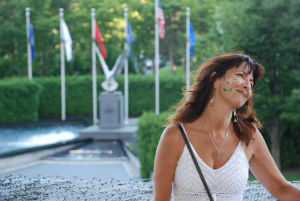
Our 2nd Annual Rally for Ali was a fabulous success this September! The Picnic for a Cause generated significantly more publicity this year when Ali’s good friend Mary Dubois was interviewed by The Troy Record and Ali’s husband Wally Urzan was interviewed by the Albany Times Union. Both had excellent featured articles about Ali’s life cut short by diabetic complications and about this years picnic at Krause’s Grove with their photograph included in the interviews. Just as wonderful this year an additional 80 people, including the Capital District Scooter and Moped Club Riders, joined us to support diabetic research at Harvard Stem Cell Institute by attending our picnic. The CDSMC also made a great video, CDSMC Rides With The Big Boys found on Ali’s Blog. http://rally4ali.blogspot.com
Gary at Krause’s Grove has already received down payment for our 3rd Annual Rally for Ali and it is confirmed that our Picnic for A Cause will take place on Saturday, September 24, 2011. Please Save the Date! Wally has already established Blue Hand Luke will be playing at the 2011 Rally and Bill of the Green Mountain Pranksters and John of the John Morse Band have both also confirmed with Ali Mama next year’s gig.
Ali enthusiastically attended her beautiful picnic and all those there who know her best, and some who knew her not at all, felt her joyous presence amongst us.
In the past two years there have been many stories related to me, not only by Ali’s family but also by her many good friends, about how they felt Ali’s palpable presence at different times in their lives since she crossed over ~ whether at a concert attended by her friends, at the beach with the all-time summertime girl, at work or home, or simply driving in their car and a special song comes on while they were thinking of Ali. Some of her friends tell me that they think of her every single day, and know that she’s with them when they need her…
Someday I’m going to put all their stories together as such hints, symbols, and sometimes downright attention-getting happenings let us know that our loved one is still with us, visits us, sends us messages (if we pay attention) and gives us signs all the time that they’re around us still. The signs and symbols, the dreams and lucid dreams Ali has been sending us have been going on for over two years now and she continues to make herself known at different times, perceiving that her family and friends will share their stories so that others will be on the lookout for the same meaningful coincidences or synchronicities. Meaningfulness, that gives the person receiving such a message not only a subjective experience, but more importantly an inner “knowing” – when our outer world and our inner worlds connect. The most important thing is we keep an open mind to receiving such experiences when they occur and even more importantly noting when they do happen. When synchronicities are noted they seem to happen more frequently for some reason even though we can’t MAKE them happen.
Just weeks after Ali crossed over, on the day of her initial Rally in 2008, a motorcycle/car cavalcade gathered together in the Troy Plaza to pay tribute to Ali’s memory by riding around her favorite haunts. There were dozens of white/cream-colored butterflies soaring all around the Plaza that day; some people noticed them, others didn’t. Butterflies represent a visitation of a loved one crossed over. They are symbolic of Imagine, the whole of your life changing to such an extreme you are unrecognizable at the end of the transformation.
Two of the beauteous Ali Baba’s most recent visitations happened in May and in August of this year, 2010. The May visitation by Ali was at Ms. Jane’s annual Cinco de Mayo party. When one of Jane’s long-time friends was arriving at the festivities, she told Jane that she “caught a glimpse of Ali out of the corner of her eye” as she got out of her car. Ali was standing in the midst of a group of friends and was laughing. The sighting was only for a nanosecond in time and then it was gone. But Jane’s friend knew that Ali was thoroughly enjoying herself there that day. In Jane’s email to me: “My friend Barbara…she's the writer and a bit of a psychic, told me when she got out of her car to come here she saw Ali out of the corner of her eye, and that Ali was here and having fun (Of course I knew that already)”.
The August visitation by Ali was to her mother (me) and to her beloved niece Meaghan who was expecting her first child; both of whom have had Ali visitations before. It happened as they were going to an OBGYN appointment just before Maggie’s baby was born on August 23rd and involves the Karner Blue Butterfly. The butterfly itself has long been a Christian symbol of resurrection, for it disappears into a cocoon and appears dead, but emerges later far more beautiful and powerful than before. As a symbol of Christ's resurrection after three days in the grave it is also a symbol of every Christian's hope of resurrection from the dead. I won’t go into that visitation in this newsletter because I don’t want to bore the skeptics among us, but will send it via another email entitled Ali and the Karner Blue Butterfly: A Synchronicity to those of us who believe that indeed there are more astounding things twixt heaven and earth than this world dreams of…
…Our Annual Rally for Ali envisions a time in which future generations will never again suffer from the killer diabetes that persistently pounded away at our gorgeous, gutsy little Ali in the very prime of her incredibly compassionate life. And finally, as we again recall how Ali’s diabetes marched tenaciously onward for 25 years before cruelly snatching her from us, we collectively pledge that this year, and every year hereafter, we will rally for Ali until her insidious destroyer is utterly defeated ~ by US ALL.
Ali is always very excited to celebrate with us the unwavering certainty that LIFE triumphs over death as she blissfully joined us at this years event in her honor ~ Our Cause ~ the 2010 SECOND ANNUAL RALLY FOR ALI ! She very much looks forward to overseeing the preparations for the 3rd Annual Rally for Ali as life, on both sides of the veil, marches on!
ALI BABA AND HER EXQUISITE LIFELONG DANCE LIVES ON! … IN ALL OF US!
God Bless and Much Love, The Family of Alison Fisk Urzan
"How does one become a butterfly?" she asked.
"You must want to fly so much that you are willing to give up being a caterpillar."
Anonymous
One of the very last “just because” cards I ever received from my beautiful daughter Ali featured a drawing of two ladies on the front of the card wearing sunhats and carrying pocketbooks and bags and they appeared to be on their way to the beach (where else?). Her multitude of friends will appreciate the expressions in the card as they capture exactly the grand spirit Ali was born with and also the relationship Ali and I have always had all our lives and still continue to have. The verse reads…
The kind of friends we’ll always be…
We’ll go where we want and we’ll do what we like.
We’ll say what we mean. We’ll mean what we say.
We’ll question authority. We’ll push the envelope.
We’ll go out a limb. We’ll fall.
We’ll pick ourselves up and try again.
But we’ll be there for each other. And we’ll survive.
We’ll become. We’ll unravel.
We’ll roll up our sleeves and roll with the punches.
We’ll hurt. We’ll heal.
We’ll weep and feel.
And then in Ali’s own handwriting…
Mom…
And we’ll grow stronger - because we are a “we,”
Because we are FRIENDS,
And we will be FOREVER!
Love,
Sookie
Dear Sookie ~
Thank you so much for being my daughter first and, at your request, forever best friends second. For letting me know, and through me, letting your circles and circles of friends know, along with all others who are interested in meaningful coincidences by way of your Karner Blue butterfly synchronicity that you’re ALIVE AND WELL and that you’re still with us every single day! I Love you, forever. ~ Mom
Alison Fisk Urzan
Saturday, October 30, 2010
STEM CELL DATABASE
REPRINT OR LICENSE
TEXT SIZE:
DUBLIN -- Maven Semantic (http://www.mavensemantic.com) announces updates to their Cancer Stem Cell research database.
The new database is now available to marketing, business development, competitor intelligence, KOL, medical affairs and related departments in the life sciences sector.
The database currently tags 47,000 individuals working in Cancer Stem Cell. http://bit.ly/cDtRZO .
Cancer stem cells (CSCs) are cancer cells (found within tumors or hematological cancers) that possess characteristics associated with normal stem cells, specifically the ability to give rise to all cell types found in a particular cancer sample. CSCs are therefore tumorigenic (tumor-forming), perhaps in contrast to other non-tumorigenic cancer cells. CSCs may generate tumors through the stem cell processes of self-renewal and differentiation into multiple cell types. Such cells are proposed to persist in tumors as a distinct population and cause relapse and metastasis by giving rise to new tumors. Therefore, development of specific therapies targeted at CSCs holds hope for improvement of survival and quality of life of cancer patients, especially for sufferers of metastatic disease.
Top 10 Countries for Cancer Stem Cell Research (ranked by number of senior Cancer Stem Cell researchers)
. United States Of America (19,200)
. Japan (4,447)
. Germany (3,100)
. United Kingdom (2,437)
. Italy (2,164)
. Canada (1,680)
. France (1,629)
. China (1,484)
. The Netherlands (968)
. Australia (843)
Leading organisations in Cancer Stem Cell research include:
. Harvard Medical School
. National Institutes of Health
. University of California
. Memorial Sloan-Kettering Cancer Center
. Fred Hutchinson Cancer Research Center
. National Cancer Institute
. Dana-Farber Cancer Institute
. Duke University Medical Center
. Washington University School of Medicine
. Baylor College of Medicine
. Indiana University School of Medicine
. Stanford University School of Medicine
. The University of Texas M. D. Anderson Cancer Center
. Massachusetts General Hospital
. Kyoto University
. Terry Fox Laboratory
. University of Cambridge
. University of Pennsylvania
. St. Jude Children's Research Hospital
. Karolinska Institutet
. Leiden University Medical Center
. Osaka University
. Medical College of Wisconsin
. Keio University
. University of Ulm
The database also includes pharmaceutical companies, biotech companies, CROs, hospitals, government labs and other organisations active in the Cancer Stem Cell research field.
Next Page
Read more: http://www.sunherald.com/2010/10/29/2594199/maven-semantic-cancer-stem-cell.html#ixzz13rED3KyK
Monday, October 11, 2010
FIRST STEM CELL TREATMENT ON A SPINAL CORD PATIENT
(CBS/AP) A California bio-tech company has begun testing an embryonic stem-cell drug treatment on a patient with spinal cord injuries, marking the first time a drug made with embryonic stem cells has been used on a human.
The patient was enrolled at Shepherd Center, a spinal cord and brain injury rehabilitation center in Atlanta.
In order to participate, the patient had to have been injured within the last two weeks. The company, Geron, hopes to enroll another eight to 10 patients in the study.
The stem-cell drug, known as GRNOPC, contains cells that turn into oligodendrocytes, a type of cell that produces myelin, a coating that allows impulses to move along nerves.
When those cells are lost because of injury, paralysis can follow. If GRNOPC1 works, the progenitor cells will produce new oligodendrocytes in the injured area of the patient's spine, potentially allowing for new movement.
Because this is an early stage study, researchers are primarily concerned with the safety of the treatment.
"When we started working with human embryonic stem cells in 1999, many predicted that it would be a number of decades before a cell therapy would be approved for human clinical trials," Dr. Thomas B. Okarma, president and chief executive officer of Geron said in a statement.
Embryonic stem cells have been at the center of funding controversies because the research involves destroying human embryos, which some have argued is akin to abortion.
But, many researchers consider embryonic stem cells the most versatile types of stem cells, as they can morph into any type of cell.
While a milestone in the technology, the drug is still a long way from being proven and reaching the market. It still faces many years of testing for effectiveness if all goes well in the early stage study.
